
Living a Passover Seder in Havana 2026
AR
With the Jewish Community of Cuba
There are nights that stay in memory forever. Not because they are perfect, but because they are true. The night of this past Wednesday, April 1st, was one of those nights. At the Beth Shalom Synagogue (El Patronato), we gathered to live a Passover Seder that became yet another link in a chain of 120 years of Jewish presence on this island.
In this year 2026, our community celebrates 120 years of uninterrupted history in Cuba. 120 years of dreams, of arrivals, of quiet prayers and shared celebrations. 120 years of resisting, adapting, and, above all, continuing to be Jewish in the heart of the Caribbean. In every Seder, in every generation, the Jewish people relive the exodus from Egypt not only as a historical event but as a call to reaffirm our identity, our unity, and our commitment to communal life.
A table where we all fit
That afternoon, as we walked through the doors of the Patronato, something special was in the air. We knew that the path to freedom is arduous and complex… but possible! As long as we have faith in G-d and walk together. And so we did.
Every step of the Seder was guided by different members of the congregation: young people, adults… and even the little ones! This demonstrated that our entire kehilá is involved and committed to preserving our Judaism. Because when we gather, when we share the matzah, when we tell the Haggadah together, we reaffirm that we continue walking as one, preserving our legacy and building our future.
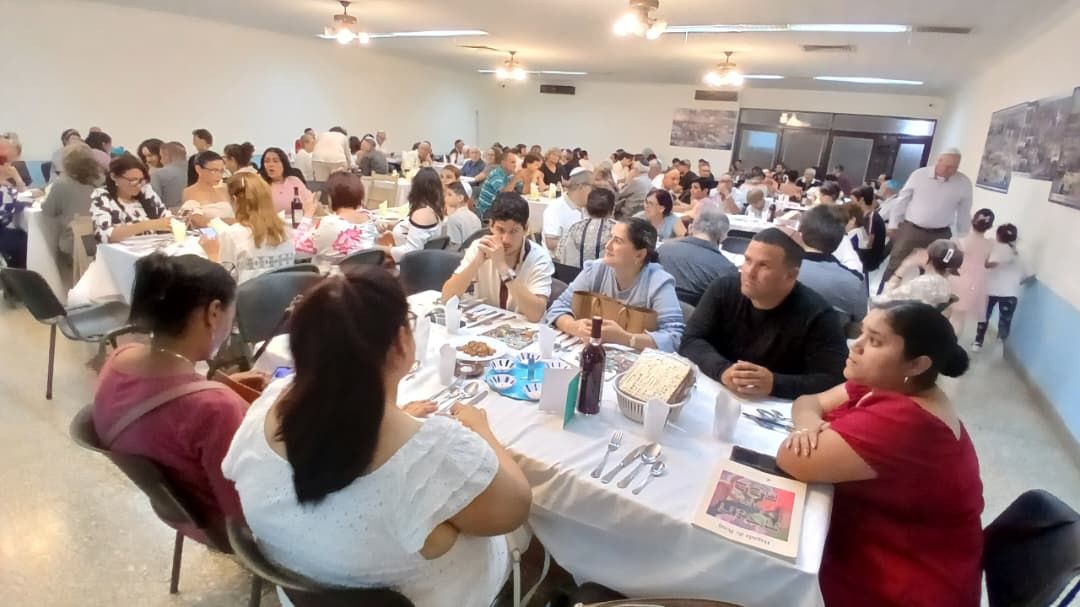
We received encouraging messages from our rabbi, in the voice of Albertico Behar, leader of the religious services group. And our dear Marlen Prinstein, president of the Hebrew Women's Association of Cuba, brought joy and gladness to the night, cheering us all on. Because on Passover, we also dance, we also sing, we also celebrate life. Before the evening ended, our president David Prinstein shared words with us that still resonate in every corner of our community. He reminded us that Cuban Jews are a strong, united community, defenders of tradition and religious practice. That is why we have not only a present but also a future!
The four cups: a toast to freedom
Throughout the Seder, we raised the four cups of wine. Each one carries a profound meaning that touches us as Jews and also as Cubans.
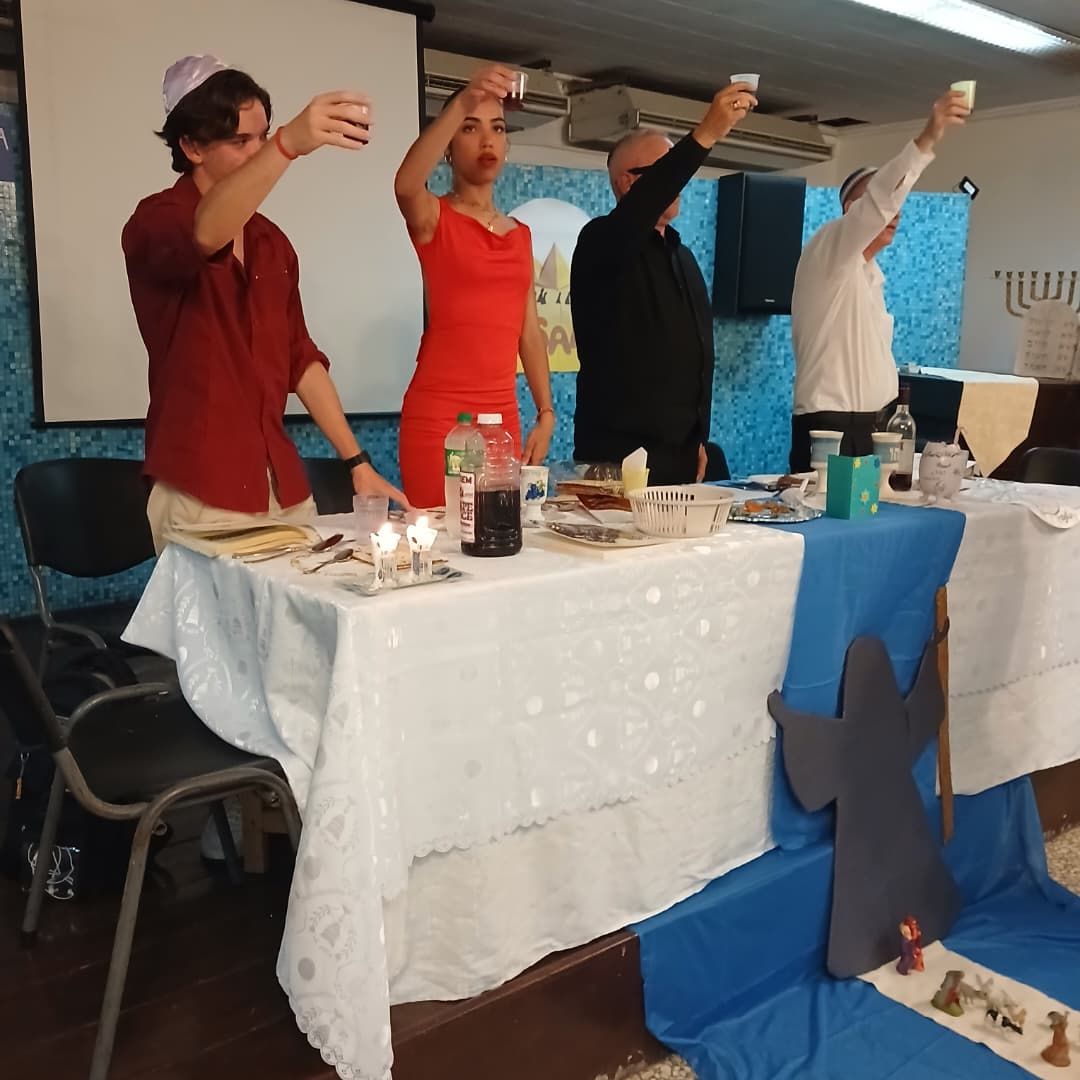
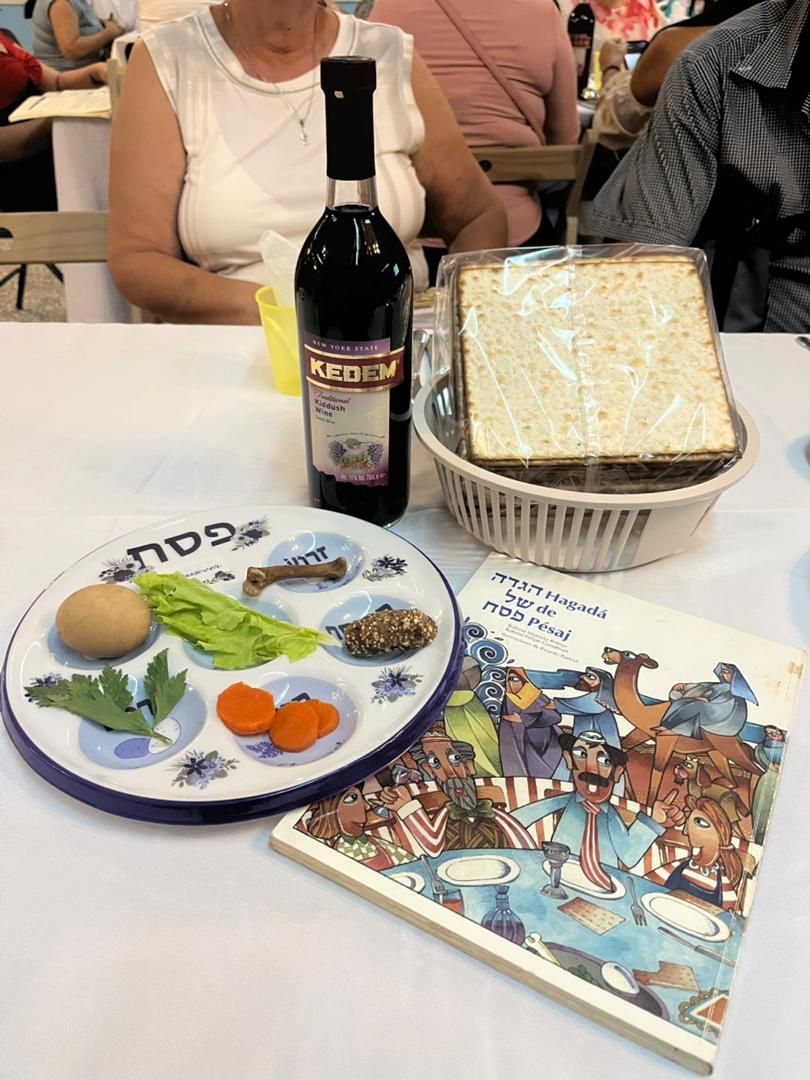
The first cup is the cup of sanctification, the Kiddush. With it, we declare that this time is sacred, different from any other. In Havana, amidst the noise and daily difficulties, raising that first cup was an act of spiritual resistance: declaring our gathering, our memory, and our identity as sacred.
The second cup is the cup of the plagues. As we recited each of the ten plagues that fell upon Egypt, we emptied a drop of wine from our cups. But on this night, we could not help but think of the contemporary plagues that still afflict our world and our beloved Cuba: the lack of communication that isolates families, the scarcity that knocks on doors, the discouragement that clouds hearts, the violence that darkens nations, the hatred that disguises itself as truth, the terrorism that haunts the Jewish people time and again, and that silent plague: indifference to the suffering of others.
We poured a drop for each of those modern plagues. Not to celebrate the pain, but to recognize it, to name it, and thus to be able to fight it. Because Passover teaches us that liberation begins when we refuse to accept oppression as destiny.
The third cup is the cup of redemption. We raised it with the hope that, just as our ancestors crossed the Red Sea toward the Promised Land, we too may cross our own seas of uncertainty. In Cuba, the sea surrounds us, but it also connects us to our history. We toast that cup for daily redemption: for the reunion with a loved one, for an act of neighborly solidarity, for the strength to continue being a community despite everything.
The fourth cup is the cup of Elijah, the most hopeful of all. It is the cup we leave undrunk on the table, open for the prophet to enter and announce the final redemption. In our Cuban Jewish community, that cup reminds us that we still await better times, that full liberation has not yet arrived, but that we keep the door open and our faith kindled. Then, after opening the door, we drink a fifth cup dedicated to the State of Israel, showing our commitment to its presence and strength in this world, for all eternity.
The afikoman and the search that never ends
One of the most beautiful moments of the Seder was, as every year, the search for the afikoman. The youngest members of the community ran between the tables, with lots of laughter, looking for that hidden piece of matzah. As we watched them, we understood something profound: the afikoman is not just a game. It is a metaphor for our own lives as Cuban Jews.
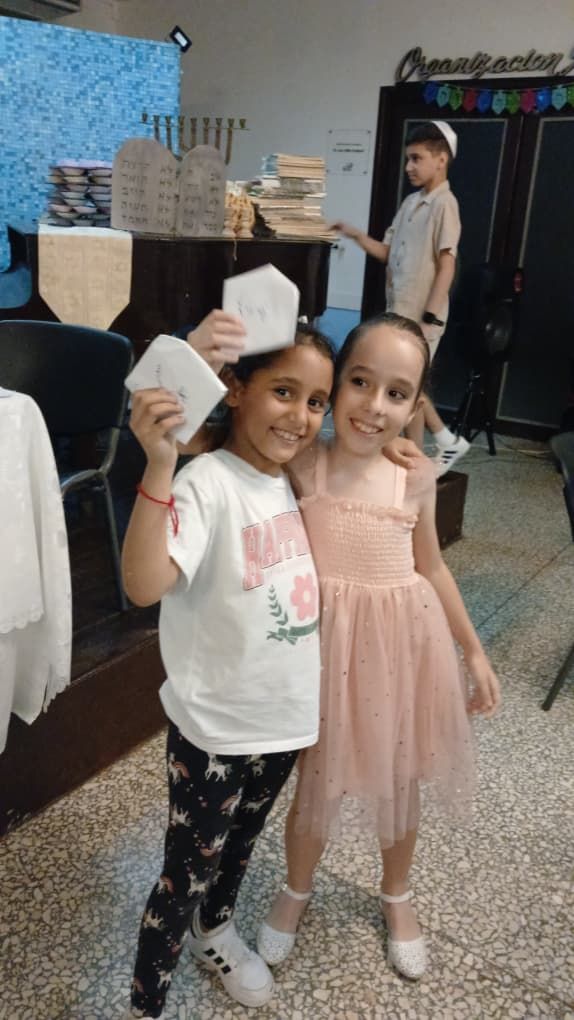
Sometimes we feel that something essential is hidden, that fullness slips through our fingers. But tradition teaches us that we must keep searching, because at the end of the Seder, that piece of matzah is found, shared, and eaten together. That is our community: a constant search for meaning, for connection, for freedom. And when we find what we are looking for—a smile, a helping hand, an embrace—we share it at the common table.
In every generation, one must see oneself as if they had left Egypt
The Haggadah commands us: "In every generation, each person must see themselves as if they had left Egypt." And that night, sitting in our tables, that is exactly what happened.
It was not an intellectual exercise. It was an embodied experience. On the palate, the bitter taste of the herbs (maror) reminded us of the harshness of slavery. That slavery which in the contemporary world takes many forms: lack of freedom, dependency, fear, loneliness. To the touch, the matzah -that bread of affliction and also of haste- reminded us that sometimes liberation arrives when we least expect it, and we must leave with whatever we have.
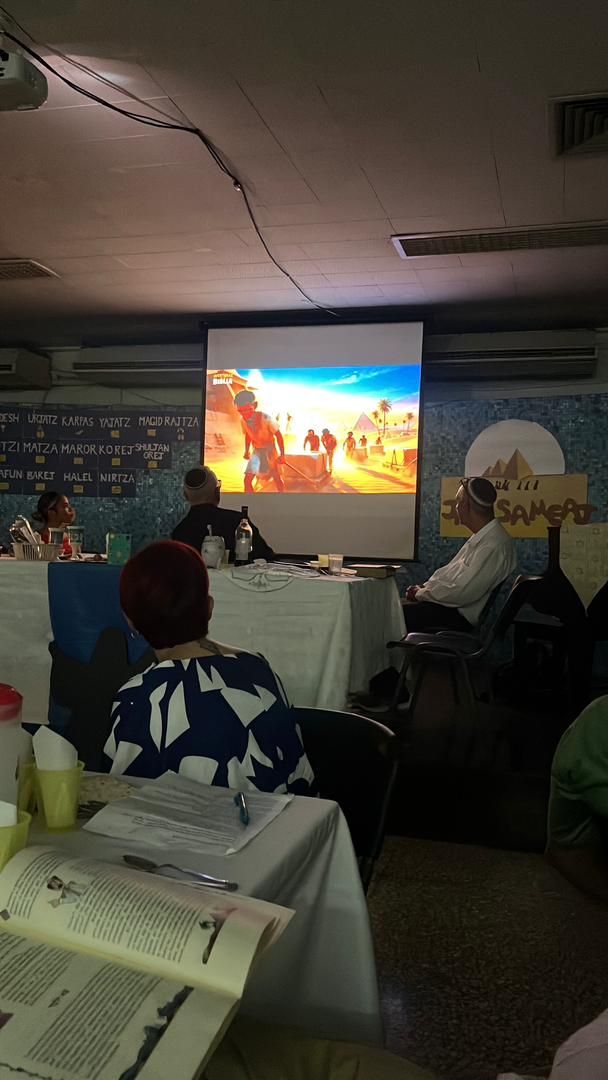
And in the heart, the shared story reminded us that Egypt is not just a geographical place. Egypt is any situation that oppresses us. And the exodus from Egypt did not happen just once thousands of years ago: it happens every time we choose hope over discouragement, action over complaint, community over isolation.
In Cuba, where each day brings its own challenges, this message resonates with special force. Because here, being Jewish and being Cuban are intertwined in the same vocation of joyful resistance, resilience, and faith that a better tomorrow is possible if we walk together.
Words that resonate and a future that is built
Before the evening ended, our president David Prinstein shared words with us that still resonate in every corner of our community. He reminded us that Cuban Jews are a strong, united community, defenders of tradition and religious practice. That is why we have not only a present but also a future! And that future is written with the hands of our children, with the voices of our elders, with the commitment of everyone.
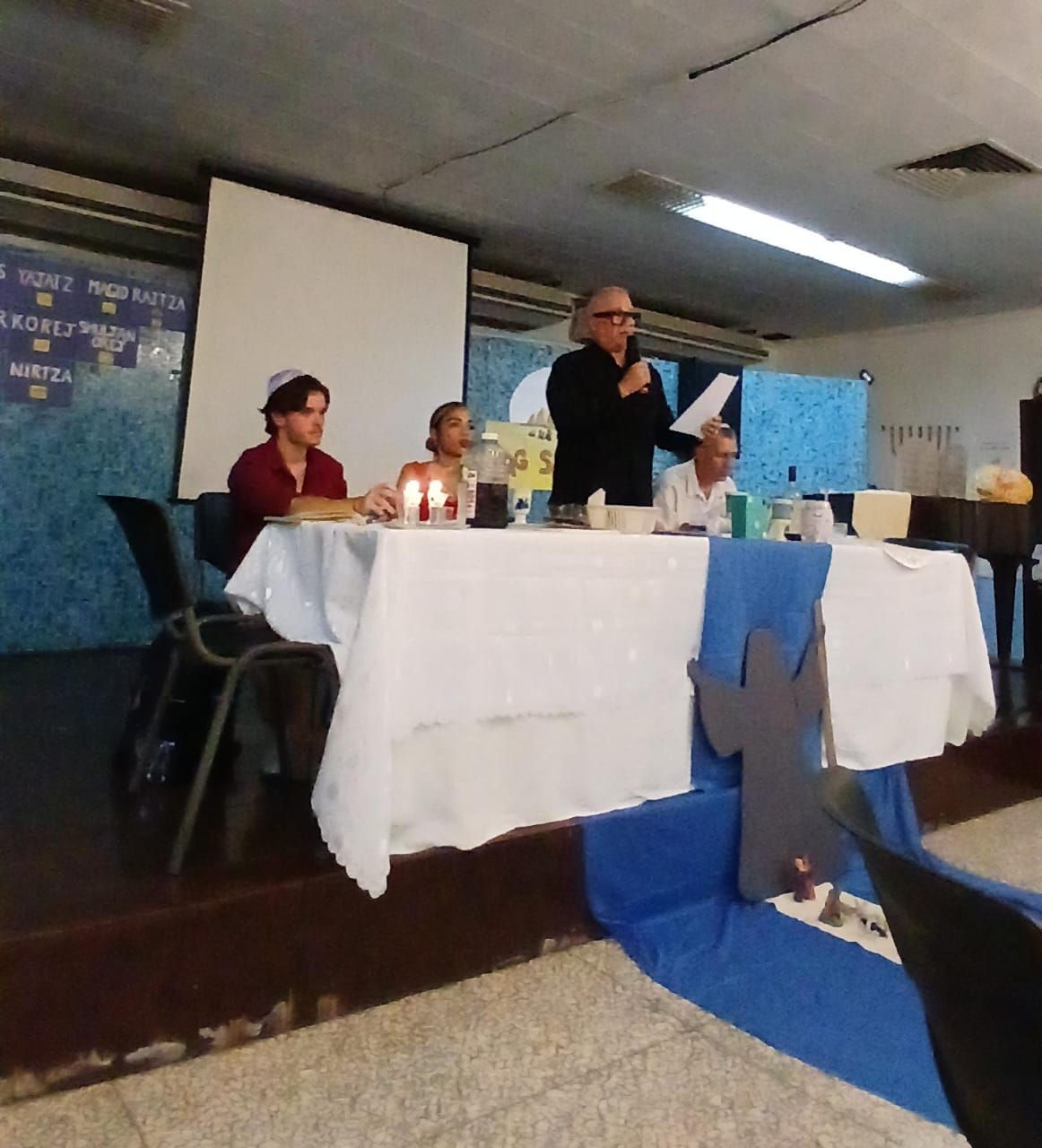
As we reached the end of this Seder, we understood that we had not only remembered an ancient story but had reaffirmed an eternal truth: the Jewish people always find the path to freedom, even in the most difficult moments. We sat together as one family. We shared the matzah, we told our story, and we transmitted, once again, that hope is not just a word but a responsibility.
What we asked for as the night closed
The Seder concluded with the vibrant singing of Hatikvah, but the message remained. Last year, we prayed that the hostages would return to their homes. This year, we pray that next year we will be free from terrorism and nuclear danger, and that there will be peace in the world. We pray that we may reach the next Passover with more light, hope, and communal life, as alive and vibrant as today.
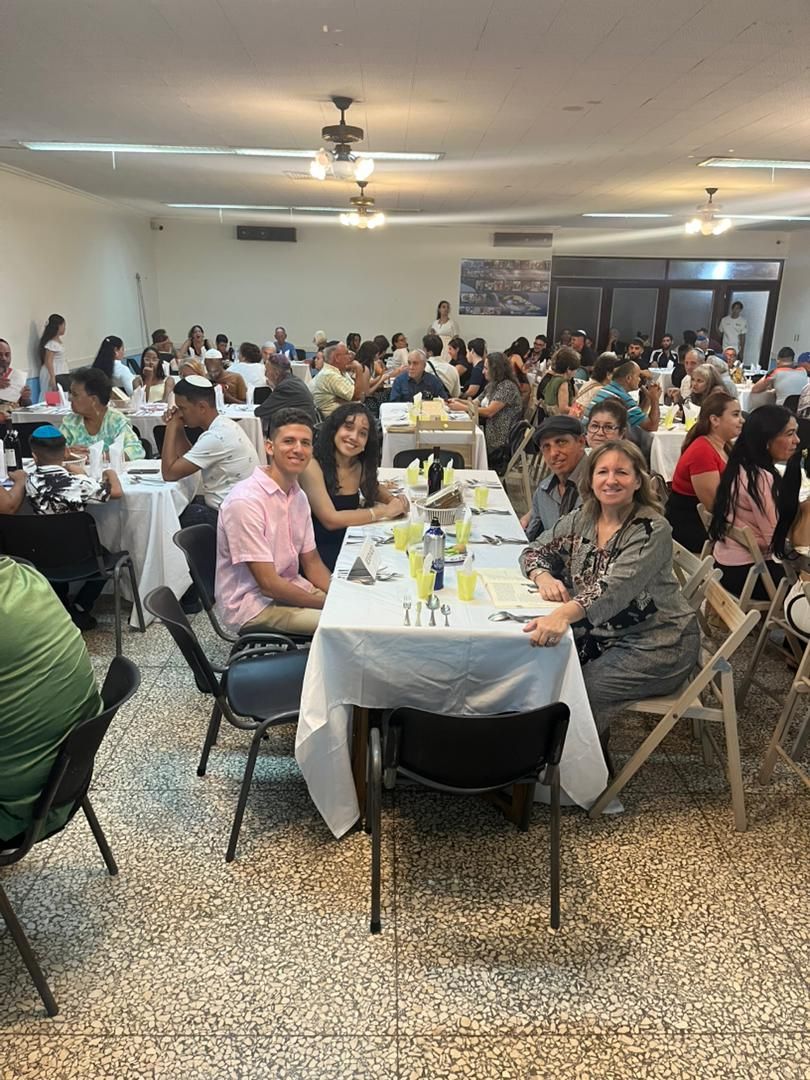
And we added one more wish, uniquely our own, both Jewish and Cuban: that we may continue celebrating on this island for another 120 years. That the matzah may continue to crunch in our hands. That the four cups may continue to toast to freedom. That the children may continue to search for the afikoman. That the door may remain open. That the community may continue, against all odds, to be a home.
We keep walking
As we rose from the table, we carried with us the spirit of Passover: the strength to move forward, the determination not to give up, and the certainty that, together, we will continue writing our story. Because we keep walking. We keep building. We keep being a community.
Chag Pesach Sameach
Am Israel BeCuba Chai