SS St. Louis: The Ship of Sorrow
AR
A story of hope, rejection, and the echo that still resonates today
To lose everything: home, savings, work, dignity. To watch lifelong neighbors turn into executioners. To feel how laws transform a person into a ghost, into a being without rights. And, despite everything, to hold on to just one thing: the desire to find a place to live in peace.
That is what more than 900 people felt when they boarded the SS St. Louis at the port of Hamburg, on that distant May 13, 1939.
·The illusion of a new beginning
On board traveled entire families: mothers clutching their children's hands with a mixture of fear and hope; fathers who had seen the flames of Kristallnacht devour synagogues and dreams. Everyone had known hatred.
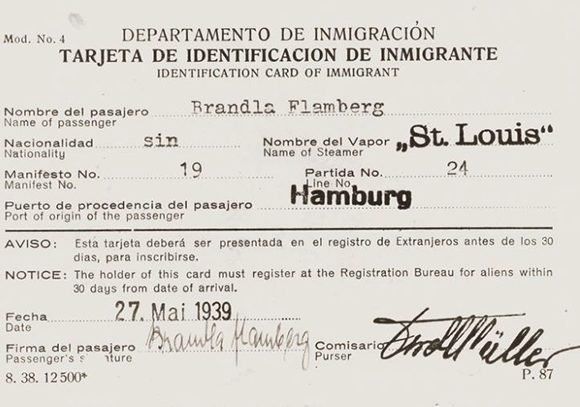
They carried with them some papers, the infamous "landing permits" purchased from a Cuban tourism office that turned out to be a mirage. They had paid $150, $200, even $500 for those documents. A fortune for those who had lost everything.
But they did not know that. They only felt that the port of Havana shone on the horizon like a promise.
Captain Gustav Schroeder, a German who refused to hate, did everything possible to return to them the humanity that had been ripped away. He turned a cabin into a synagogue. He ordered his crew to treat those "Jews" with the same courtesy as any other passenger. And when the Nazi photographer tried to capture their misery to turn it into propaganda, Schroeder sent him away.
But not even a brave captain could change the fate that awaited them.
The closed port
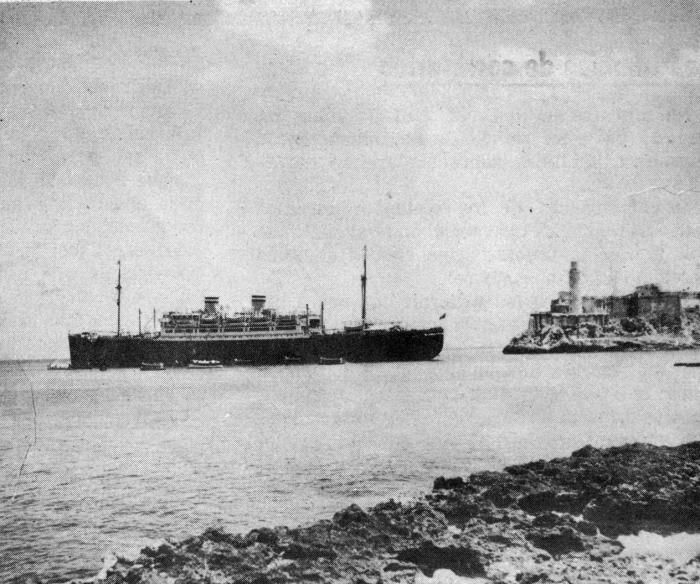
On May 27, 1939, the St. Louis arrived in Havana. The passengers crowded onto the deck, excited. Finally. After hell, the promised land.
But something was wrong. The ship did not dock. Cuban authorities came on board, inspected, and left without explanation. Only 28 people — those with proper visas or those who were not Jewish — were allowed to disembark.
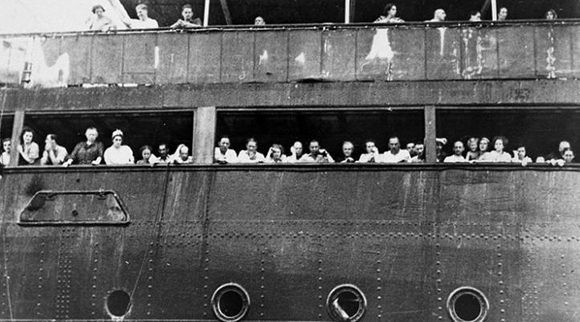
The rest remained, gazing at the city through the railings, watching their dreams dissolve under the Caribbean sun.
Cuban President Federico Laredo Brú had signed a decree days before the ship set sail. The permits those refugees had bought with what little they had left were now worthless. Now $500 per person was required. An impossible sum.
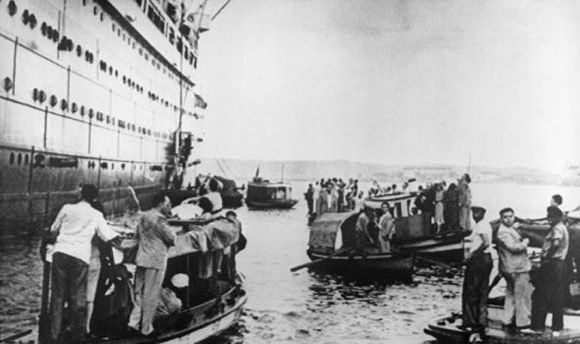
The ship remained anchored in Havana Bay for six days. Six days of uncertainty, of pleas, of negotiations that went nowhere. Meanwhile, passengers watched from afar as their relatives who were already in Cuba rented small boats to approach, to shout to them not to lose hope.
But hope is a luxury the world sometimes does not grant.
The world's indifference
Captain Schroeder did not give up. He dressed in civilian clothes, went ashore, and begged for an audience with the president, with anyone. No one would listen to him.
He then tried the United States. He sailed so close to the Florida coast that passengers could see the lights of Miami. But the U.S. Coast Guard patrolled the waters to ensure no one jumped. The Roosevelt administration, choked by immigration quotas and fear of public opinion, also said no.
Canada said no. The entire world said no. "Let them get in line," came the response from Washington. As if those human beings, fleeing certain death, could afford to wait.
On the ship, desperation became tangible. One man, Max Loewe, a decorated veteran of World War I, threw himself into the sea. He survived. But his act was everyone's silent scream.
The return to the nightmare
On June 2, 1939, the St. Louis left the port of Havana. The people of Havana, in solidarity, came out to bid them farewell. But words of encouragement could not fill the void those refugees carried in their chests.
They headed back to Europe. Captain Schroeder swore he would not return them to Germany. He sailed in circles, lengthened the journey, and conspired with his crew to sink the ship near the English coast if necessary. He preferred a shipwreck to delivering those souls to the executioners.
Finally, four countries agreed to take them in: Belgium, the Netherlands, France, and the United Kingdom. The passengers breathed a sigh of relief. They had survived.
But the story does not end there. One year later, the Nazis invaded Western Europe. Hundreds of those refugees who had disembarked in Belgium, the Netherlands, and France fell once again into the claws of horror. They were sent to Auschwitz, to Sobibor, to the death they had tried to leave behind at the port of Hamburg.
The epilogue of this heartbreaking story dates back to the German invasion of Western Europe in May 1940: approximately 670 refugees from the SS St. Louis were trapped by the Nazis and died in concentration camps. About 240 survived years of hunger, mistreatment, and forced labor.
What the St. Louis still tells us
This story is not just a memory. It is a mirror.
Today, as then, thousands of people flee war, persecution, and death. Today, as then, many countries close their doors. There is talk of quotas, of waiting lists, of fear that "they will take our jobs" or "threaten our way of life."
The same excuses. The same words. A different century.
The SS St. Louis was called "the ship of sorrow." But the sorrow was not in its masts or its cabins. It was in the hearts of those who, having the power to save, chose to look away. Captain Gustav Schroeder died in 1957 but was recognized as "Righteous Among the Nations" in 1993. An honor deserved by a man who understood something fundamental: that humanity is not negotiable.
And his passengers, those who survived, left us a lesson: indifference is complicit in horror, and closing a port can mean, for someone, closing the door to life itself.
When today we see in the news those boats crossing the Mediterranean, or those families knocking on southern borders, let us ask ourselves: have we learned anything from the St. Louis? Or are we still the same world that, in 1939, said "no" to more than 900 souls who only asked for a place to live in peace?
The story of the SS St. Louis pains us because it shows us the worst of ourselves: our capacity to witness the suffering of others and do nothing. But it also shows us the best: the courage of a captain, the solidarity of a port that bid farewell to the ship with tears, the lives of those who survived to tell the tale.
Perhaps that is what remembering is about. Not only the pain, but the small cracks through which hope can still filter through.